Scale on fixtures
Hardness minerals can leave visible deposits on faucets, shower doors, and other wet surfaces.
Pressure Tank & Control Valve
53 Google Reviews
Long Island Based Family Business
Veterans & First Responders
Pressure Tank & Control Valve
53 Google Reviews
Long Island Based Family Business
Veterans & First Responders
Pressure Tank & Control Valve
53 Google Reviews
Long Island Based Family Business
Veterans & First Responders
Home-specific hardness treatment
A water softener reduces hardness minerals through ion exchange, helping address scale, soap residue, and mineral buildup in plumbing and water-using appliances. Freshline Water sizes softeners for the household's water conditions, occupancy, bathroom count, service-flow needs, and available installation space.
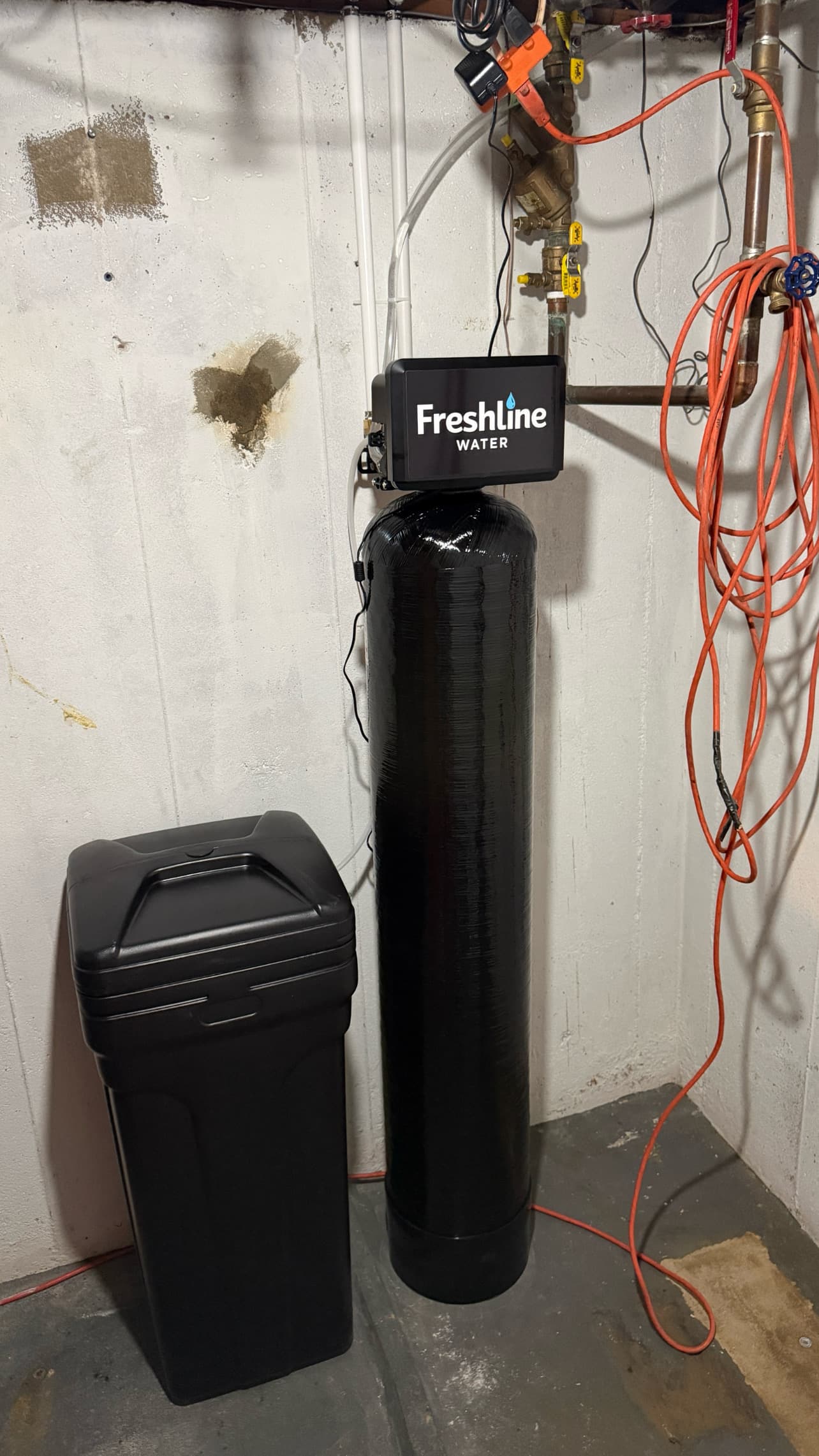
Inside a softener tank, ion-exchange resin attracts hardness minerals as water passes through the media. The system periodically regenerates the resin with a brine solution so it can continue treating incoming water.
System capacity and regeneration settings matter. A unit that is too small may regenerate too frequently or struggle during peak demand. An oversized or poorly configured unit can also operate inefficiently. Freshline reviews actual household factors before recommending a configuration.
The control valve measures or schedules system operation, while the pressure tank contains the treatment resin. Freshline systems include professional setup and confirmed lifetime warranty coverage on the pressure tank and control valve.
Treatment recommendations depend on the property and selected equipment. Freshline reviews the application before recommending a system.
Hardness minerals can leave visible deposits on faucets, shower doors, and other wet surfaces.
Hard water can contribute to soap residue and may require more product for washing and cleaning.
Scale can accumulate in plumbing and water-using appliances over time.
Many homeowners consider softening when they dislike how hard water feels during bathing and cleaning.
The softener is normally installed near the main water entry point with access to a drain, electrical outlet, and space for the brine tank.
Freshline installs a bypass so the equipment can be serviced without unnecessarily interrupting the home's plumbing. The valve is programmed for the selected capacity and household conditions.
After installation, the system is checked for leaks and operation, and the homeowner receives an explanation of salt use, regeneration, and routine care.
Homeowners periodically add the appropriate softener salt and keep the brine tank accessible. Salt use varies with water hardness, household demand, and system settings.
Freshline can help with questions about salt levels, regeneration, changing water use, or service. The pressure tank and control valve carry lifetime warranty coverage under the current warranty terms.
Common signs include recurring scale, spotting, and soap residue, but testing or reliable water-quality information is the best way to confirm hardness.
No. A softener is designed for hardness treatment. Other concerns may require carbon, sediment, iron, sulfur, or reverse-osmosis treatment.
Frequency depends on hardness, capacity, household demand, and valve settings. A properly sized metered system regenerates according to actual use.
Compare treatment approaches, review equipment options, and see examples of professionally installed Freshline systems before choosing a configuration for your home.
Tell us about your home and water concerns. We'll help you compare appropriate options without a one-size-fits-all recommendation.
Request a Consultation