Drinking-water taste
Multi-stage treatment can improve the drinking-water experience at a dedicated kitchen faucet.
Pressure Tank & Control Valve
53 Google Reviews
Long Island Based Family Business
Veterans & First Responders
Pressure Tank & Control Valve
53 Google Reviews
Long Island Based Family Business
Veterans & First Responders
Pressure Tank & Control Valve
53 Google Reviews
Long Island Based Family Business
Veterans & First Responders
Dedicated filtration for drinking and cooking water
Reverse osmosis is a point-of-use treatment process that sends water through multiple filtration stages and a semipermeable membrane. Freshline Water offers traditional and tankless RO options for Long Island homeowners who want a dedicated drinking-water faucet selected around household use, available space, and maintenance preferences.
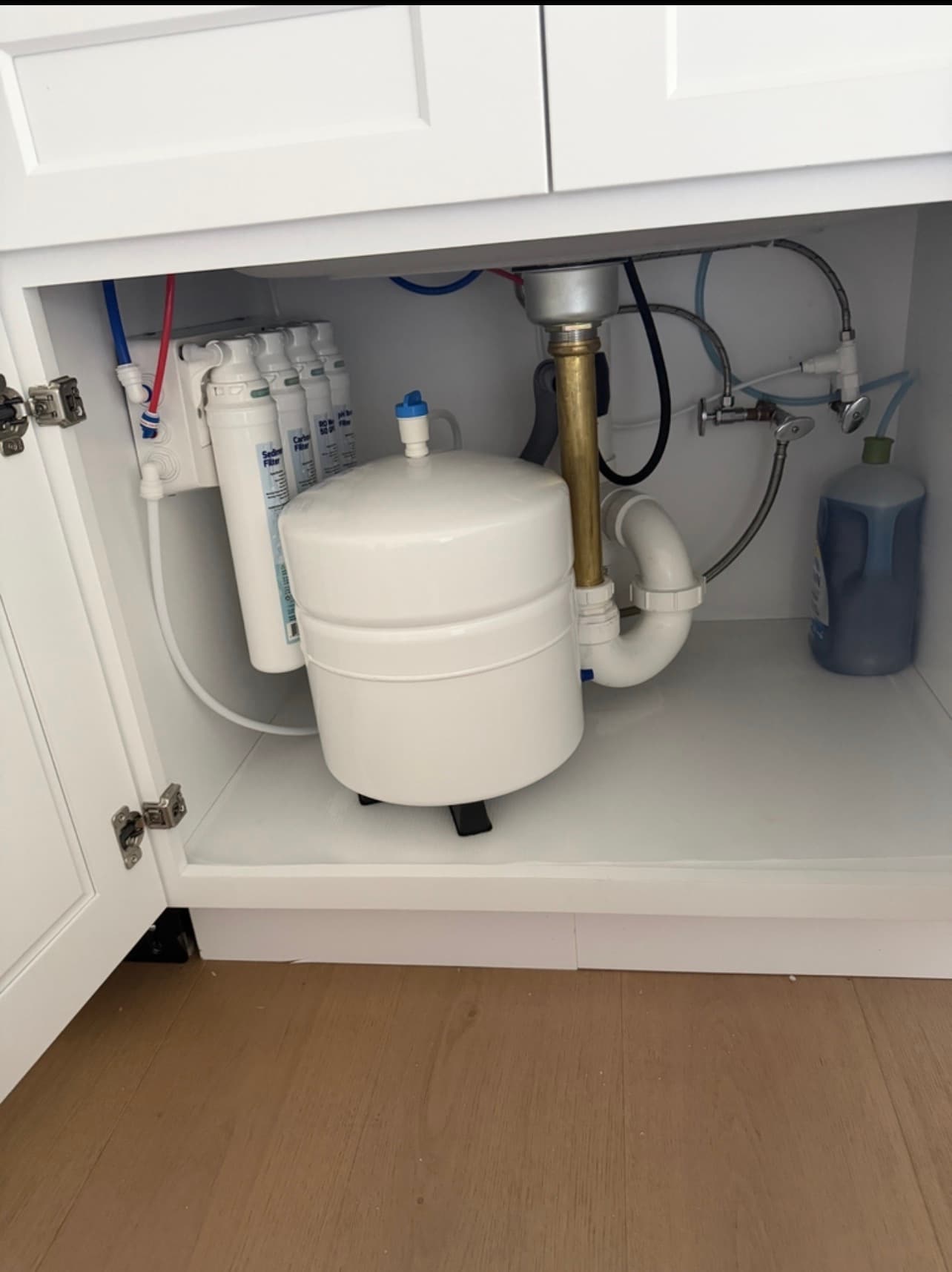
A typical reverse-osmosis system uses prefiltration to protect the membrane, the RO membrane itself, and post-filtration before water reaches the dedicated faucet. Traditional systems store treated water in a small tank. Tankless systems produce water on demand and can reduce the amount of cabinet space used.
RO performance depends on incoming water pressure, temperature, membrane design, filter condition, and feed-water quality. The exact reduction claims and certifications vary by model, so Freshline matches product documentation to the selected system rather than making one universal claim.
Reverse osmosis is normally used for drinking and cooking water at one location. It complements, rather than replaces, whole-home treatment when a property also needs filtration or softening at the main water line.
Treatment recommendations depend on the property and selected equipment. Freshline reviews the application before recommending a system.
Multi-stage treatment can improve the drinking-water experience at a dedicated kitchen faucet.
An RO membrane is designed to reduce a range of dissolved substances; model-specific performance should be checked in the product documentation.
An under-sink system provides treated water at home without relying on routine cases of bottled water.
Tankless and compact configurations provide options for kitchens where under-sink space is important.
Freshline checks the under-sink area, cold-water connection, drain connection, faucet location, and power availability when required by the selected model.
The system is mounted and connected, then flushed and checked according to the manufacturer's startup instructions. The dedicated faucet is tested before the installation is completed.
The homeowner receives model-specific guidance for normal operation and future filter service.
RO prefilters and postfilters require periodic replacement. Membrane life varies with feed water, use, and maintenance. Freshline follows the schedule and specifications for the installed model.
Changes in taste, production rate, or dispensing speed can indicate that filters or service are due. Keeping up with maintenance protects membrane performance and water quality.
Residential RO is commonly installed at one point of use for drinking and cooking. Whole-home filtration and softening use different equipment on the main line.
Traditional RO stores treated water in a tank. Tankless RO produces water on demand and has different space, power, flow, and maintenance considerations.
Replacement intervals depend on the model, household use, and feed-water conditions. Freshline provides the schedule for the installed system.
Compare treatment approaches, review equipment options, and see examples of professionally installed Freshline systems before choosing a configuration for your home.
Tell us about your home and water concerns. We'll help you compare appropriate options without a one-size-fits-all recommendation.
Request a Consultation